How AI Product Photography Actually Works
Discover how artificial intelligence is changing the game for online sellers, making professional product photos accessible to everyone.
The Old Way Was Broken
For decades, professional product photography followed the same formula: rent studio time, hire a photographer, bring in stylists and props, shoot for hours, wait days for edited images, pay thousands of dollars.
Big brands could afford this. Small sellers couldn't.
The result was a visual divide in e-commerce. Major retailers showed products in beautiful, conversion-optimized images. Everyone else made do with whatever they could capture on their phone, often losing sales to competitors who simply looked more professional.
That divide is closing fast.
What Changed
Three technological shifts converged to make AI product photography possible:
Image generation models got good
Really good. The difference between AI-generated images and real photographs has become nearly impossible to detect in many cases. Modern generative models understand lighting, perspective, materials, and composition at a level that rivals professional photographers.
Computing costs dropped
Running these models used to require expensive hardware and technical expertise. Now it happens in the cloud, on-demand, at a fraction of what it cost even two years ago.
Training data expanded
These models learned from millions of professional product photos, absorbing decades of photography knowledge about what makes products look their best.
The result: what once required a $5,000 photoshoot can now happen automatically for a few dollars.
How AI Product Photography Actually Works
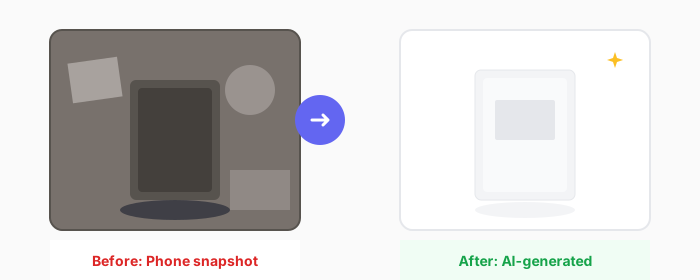
You might be wondering what's happening behind the scenes when you upload a product photo and get back professional images.
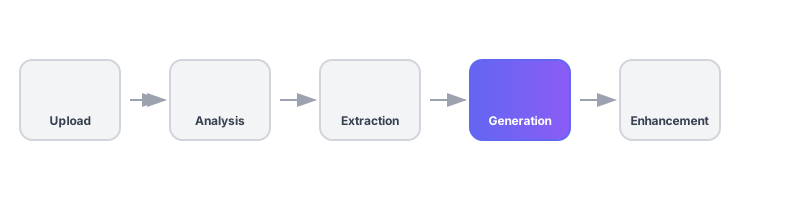
The process involves several steps:
1. Product Analysis
The AI identifies what your product is, its shape, materials, and key visual features. It learns whether it's looking at leather or plastic, matte or glossy, rigid or flexible.
2. Background Removal
Your product gets isolated from whatever background you shot it against. This happens with pixel-level precision, handling even tricky edges like hair, fur, or transparent materials.
3. Scene Generation
Based on the style you select, the AI generates an appropriate environment. This isn't pasting your product onto a stock photo. It's creating a new scene where lighting, shadows, and reflections are all physically accurate for your specific product.
4. Quality Enhancement
The final image goes through enhancement passes that improve sharpness, color accuracy, and overall polish.
Who Benefits Most
AI photography levels the playing field, but some sellers see bigger gains than others.
Dropshippers and resellers often work with manufacturer photos that dozens of other sellers are also using. AI-generated images create visual differentiation without the cost of original photoshoots.
Handmade and craft sellers typically make great products but lack photography skills or equipment. AI bridges that gap instantly.
High-volume sellers managing hundreds or thousands of SKUs face massive photography backlogs. AI processes products in minutes rather than scheduling weeks of studio time.
International sellers needing lifestyle images for different markets can generate culturally appropriate scenes without arranging multiple photoshoots.
What AI Can and Can't Do
Let's be realistic about current capabilities:
AI excels at:
- Clean product-on-white images
- Lifestyle and environmental shots
- Consistent lighting and shadows
- Quick turnaround for large catalogs
- Generating multiple variations
AI still struggles with:
- Products that need to show specific functionality
- Items where exact color matching is critical (paint, fabric swatches)
- Complex multi-product arrangements
- Images that need to show scale with human interaction
The sweet spot is using AI for the bulk of your product photography needs while reserving traditional photography for cases where it's truly necessary.
Getting Started
If you haven't tried AI product photography yet, the barrier to entry has never been lower.
Here's what to expect:
- Upload a clear photo of your product (even a phone photo works)
- Select the style or styles you want
- Receive professional images in minutes
- Download and use wherever you sell
Start your free trial and see the results for yourself.
Ready to transform your product photos?
Upload a photo and see what AI can do. No credit card required.
Try it freeMore articles
From studio white backgrounds to lifestyle shots, learn which photo styles work best for different products and platforms.
These common errors could be costing you sales. Learn what they are and how to fix them.